DreamHero Items & Equipment Guide
DreamHero features a deep item and equipment system that rewards strategic gear management. From common drops found in early dungeons to mythic-tier forged sets, understanding how to acquire, upgrade, and equip your captured heroes is essential to conquering the game's Roguelike challenges and story campaigns.
Item Categories and Rarity Tiers
Items in DreamHero fall into several broad categories: weapons, armor (helmets, chest pieces, and boots), accessories, and consumables. Weapons and boots primarily influence offensive stats such as attack power and speed, while helmets and chest pieces bolster defensive attributes like HP and damage resistance. Accessories provide a variety of utility bonuses, including improved capture rates, movement speed, or elemental resistances that prove critical in later Roguelike runs.
Equipment drops follow a tiered rarity system ranging from Common, Uncommon, Rare, Epic, and Legendary up to the coveted Mythic grade. Higher-rarity items not only carry stronger base stats but may also include bonus affixes. During Roguelike runs, item drops are randomized, so players should evaluate each piece carefully rather than assuming a higher rarity is always the best fit for their current hero composition.
Consumable items—such as healing tonics, temporary stat boosters, and antidotes—can be found throughout dungeon floors or purchased from vendors. Keeping a well-stocked inventory of consumables before entering a Roguelike run can mean the difference between a successful clear and an early defeat.
Equipment Forging and Upgrade Paths
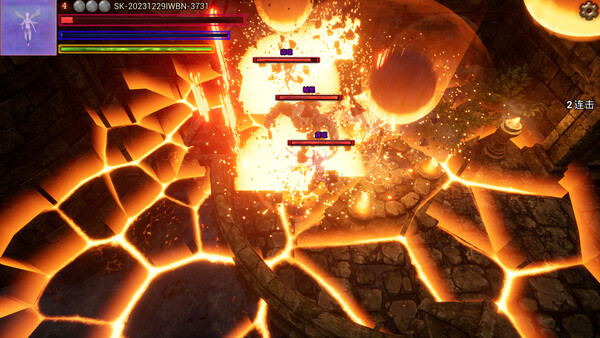
DreamHero's forging system allows players to craft and enhance their gear at the Blacksmith. Forging requires materials collected from defeated enemies, dungeon chests, and dismantled surplus equipment. Players can combine multiple lower-tier pieces to produce higher-quality gear—for example, gathering enough Epic-grade duplicates to forge a single Legendary piece. This encourages players to hold onto seemingly redundant drops rather than discarding them outright.
Leveling gear is equally important. Equipment can be upgraded through material investment, and reaching certain level thresholds unlocks set activation bonuses when a full matching set is equipped. The most efficient strategy is to focus on completing a full four-piece set at base level first to unlock the initial set bonus, then work toward leveling all four pieces uniformly rather than maxing out a single item, as the strongest set bonuses only activate when all pieces reach the same upgrade milestone.
Three primary forged sets are available for endgame builds: the Guardian's Resolve set for defensive heroes, the Shadowstrike set for agile damage-dealers, and the Titan's Fury set for brute-force fighters. Each set's bonus attributes align with a specific hero archetype, so players should plan their forging goals around the heroes they intend to main.
Optimal Gear Builds by Hero Type
Because DreamHero allows players to capture and control defeated enemies as new heroes, the roster can grow quite large. Organizing heroes by role—tanks, damage dealers, summoners, and support—helps determine which gear sets and stat priorities to pursue. Tanks benefit most from the Guardian's Resolve set and should prioritize HP and damage resistance on every armor slot. Damage dealers, by contrast, should seek out weapons and boots with the highest attack stats and consider the Shadowstrike set for its critical-hit bonuses.
Summoner-type heroes, which call allied creatures into battle, scale best with accessory slots that boost summon duration and potency. For these heroes, individual weapon stats matter less than ensuring their summoned allies remain effective throughout an encounter. Support heroes should focus on hybrid builds that balance survivability with utility stats, allowing them to stay in the fight long enough to provide healing or buffs to the team.
When tackling Roguelike mode, flexibility is key. Since item drops are randomized each run, locking into a single build path can leave a hero underpowered if the right pieces never appear. Experienced players recommend keeping at least two viable gear configurations per hero so they can adapt to whatever equipment the dungeon provides.
Inventory Management and Organization
As the hero roster and equipment collection grow, maintaining an organized inventory becomes critical. A recommended approach is to sort heroes by role: keep your most-used builders or summoners in one group for quick access, and place situational or newly captured heroes in a separate section. This ensures that during time-sensitive moments—such as swapping heroes mid-dungeon—players can find the right character without scrolling through an unmanaged list.
For gear, consider organizing by set rather than by individual piece. Grouping all Guardian's Resolve pieces together, for instance, makes it easy to see progress toward a complete set and quickly identify which slot still needs an upgrade. Surplus equipment earmarked for forging materials should be stored separately so it is not accidentally equipped or sold.
Tips for Efficient Gear Progression
Early in the game, do not invest heavily in upgrading Common or Uncommon equipment. These pieces will be replaced quickly as Rare and Epic drops begin appearing in mid-game dungeons. Save forging materials for gear you plan to use through the endgame, and focus initial resources on completing your first full Rare set to benefit from early set bonuses.
In Roguelike mode, prioritize picking up equipment that complements your current hero's weaknesses rather than doubling down on existing strengths. A damage dealer who already has strong attack stats will benefit more from a defensive accessory that keeps them alive through tough floors than from a marginal weapon upgrade. Finally, always check the Blacksmith after each successful run—newly gathered materials may be just enough to forge that next tier of gear and push your team to the next level of content.